Structured Cabling Company in NYC
Network cabling, conference room AV, fiber and Wi-Fi infrastructure for offices, boardrooms and commercial fit-outs across New York City. Twenty years in the field — design, install, test, support.

Four things, done by one crew
We cable commercial spaces in New York City and finish the rooms that depend on that cabling — network infrastructure, conference room AV, office moves and Division 27 fit-out work, under one contractor and one certificate of insurance.
Structured & Network Cabling
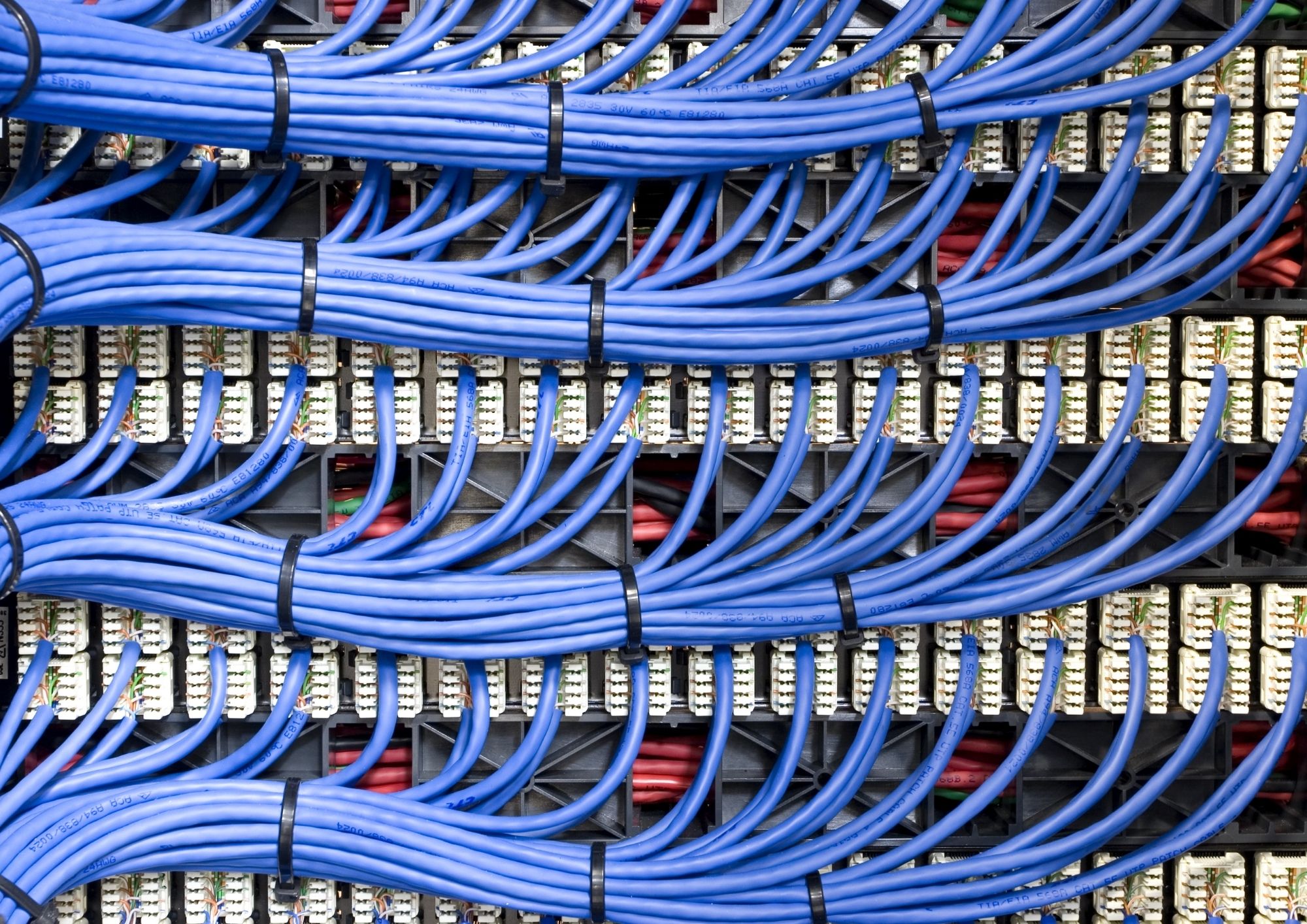
CAT6 and CAT6A data drops, fiber backbone, voice and data, MDF/IDF racks and Wi-Fi access point cabling — tested and certified before handover.

Conference Room & Boardroom AV
Displays, video conferencing, boardroom audio and room commissioning. We mount it, cable it, and stay until the room actually joins a call.

Office Relocation Cabling
New space cabled, tested and labelled before move day, with a cutover plan that has everyone working Monday morning.
Low Voltage Contractor
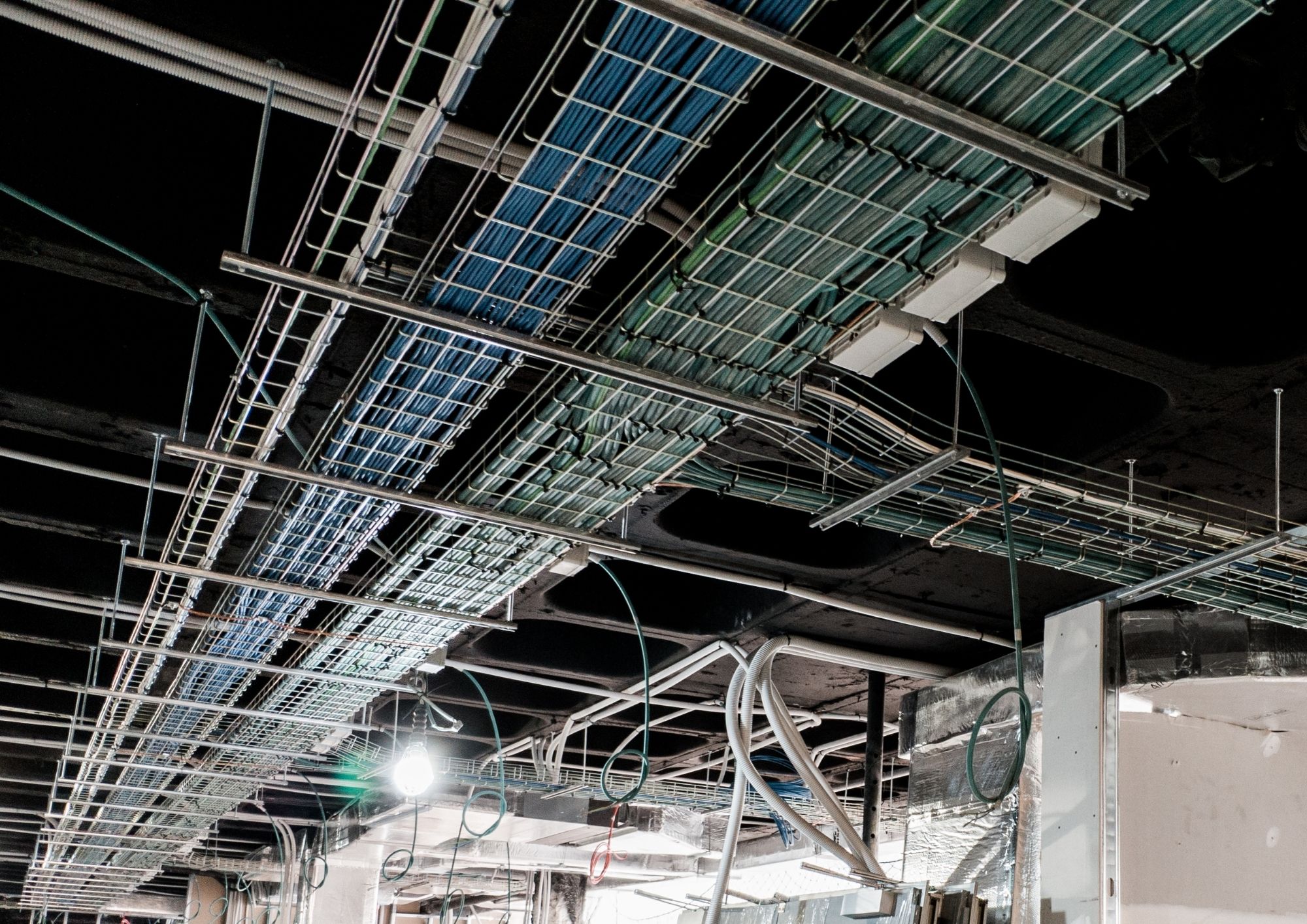
Division 27 scope for fit-outs and buildouts — pathways, cable tray, rough-in and coordination with your GC and building.
Most cabling companies stop at the patch panel
We finish the room. The display is mounted, the camera is framed, the microphones are levelled and the room joins a call before we leave the building.
A conference room that doesn't work is rarely a cabling problem and rarely an AV problem — it's the gap between two contractors blaming each other. Running both scopes with one crew removes the gap entirely: one site walk, one schedule, one certificate of insurance, one number to call when the room misbehaves.
Boardrooms, huddle rooms, training rooms and multi-purpose spaces across Manhattan, Brooklyn, Queens and the outer boroughs — cabled, mounted, commissioned and handed over working.


Huddle & meeting rooms
Single-display rooms with a bar camera and speakerphone, cabled cleanly and configured for Teams or Zoom.
Boardroom audio
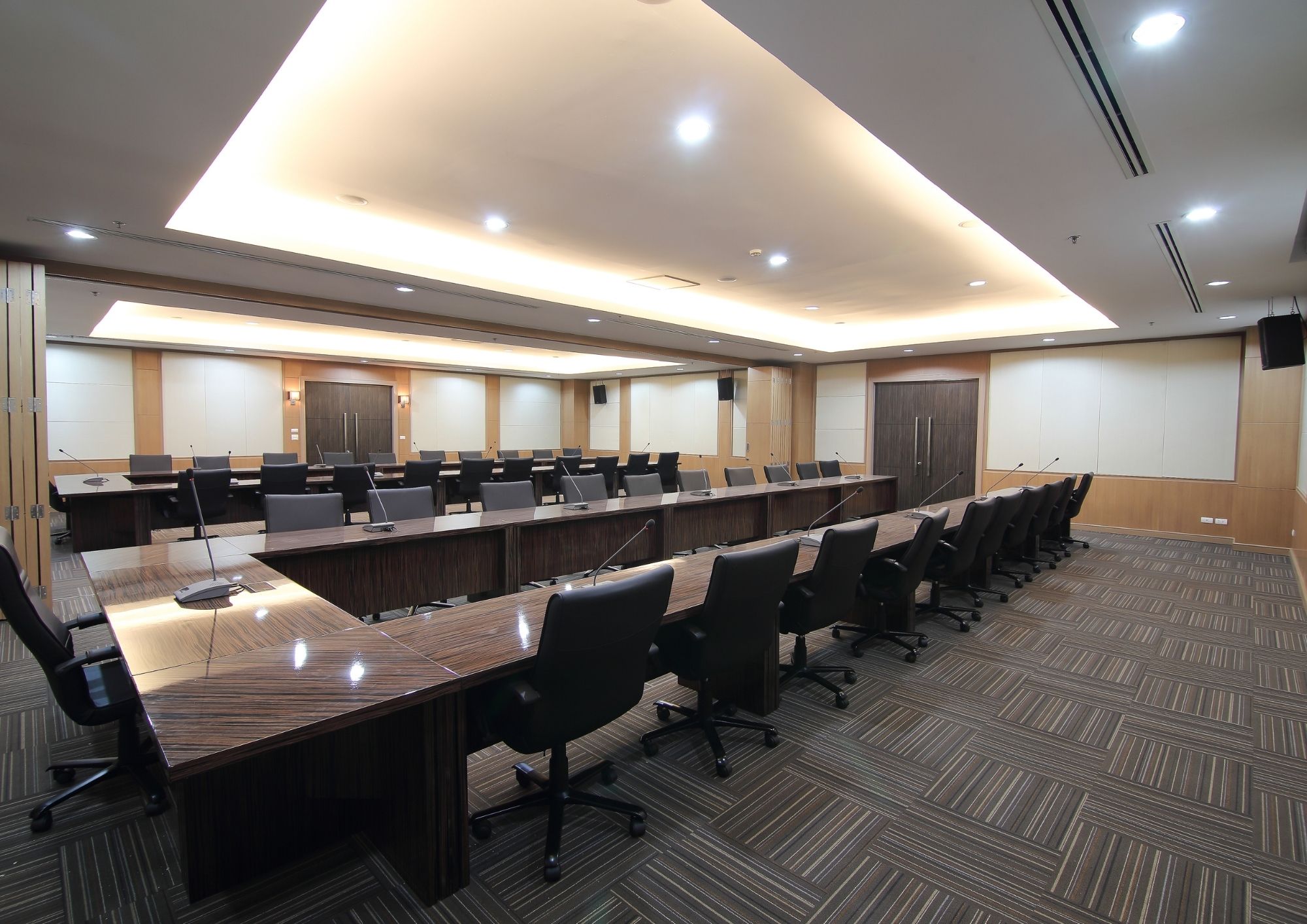
Ceiling and table microphones, DSP, levelling and echo control so the far end can hear the whole table.

Whole-floor fit-outs
Workstations, meeting rooms, reception and Wi-Fi cabled together as one scope on one schedule.
What is structured cabling?
Structured cabling is the standardised system of copper and fiber cabling, patch panels, racks and pathways that carries data, voice and video through a commercial building — built to the ANSI/TIA-568 standard so any device can be moved, added or changed without rewiring.
In practice it means every desk, camera, access point and phone in your space terminates on a labelled port in a network rack, rather than a tangle of one-off runs nobody documented. A TIA-568 horizontal run is limited to 90 metres of permanent link plus 10 metres of patch cord — which is what determines how many IDF closets a floor actually needs.
We design, install, test and certify that system for offices, commercial buildings, medical suites, schools and multi-tenant properties across New York City, Long Island and northern New Jersey.
CAT6 & CAT6A Data Drops
New drops, additional drops and full-floor pulls. Terminated, labelled to TIA-606, dressed into the rack and certified before handover.

MDF / IDF & Rack Buildouts
Main and intermediate distribution frames, racks, patch panels, vertical and horizontal management, grounding and labelling schedules.

Fiber Optic Cabling
Single-mode and multimode backbone, riser and building-to-building runs. We terminate, splice and certify fiber in-house — not subcontracted.

Voice & Data Cabling
VoIP handset drops, phone system cabling, demarc extensions and legacy voice riser work for offices and multi-tenant buildings.
Wi-Fi Access Point Cabling
PoE drops to ceiling and wall-mounted access points, placement coordination, mounting and cable dress above hard and drop ceilings.

Testing, Certification & As-Builts
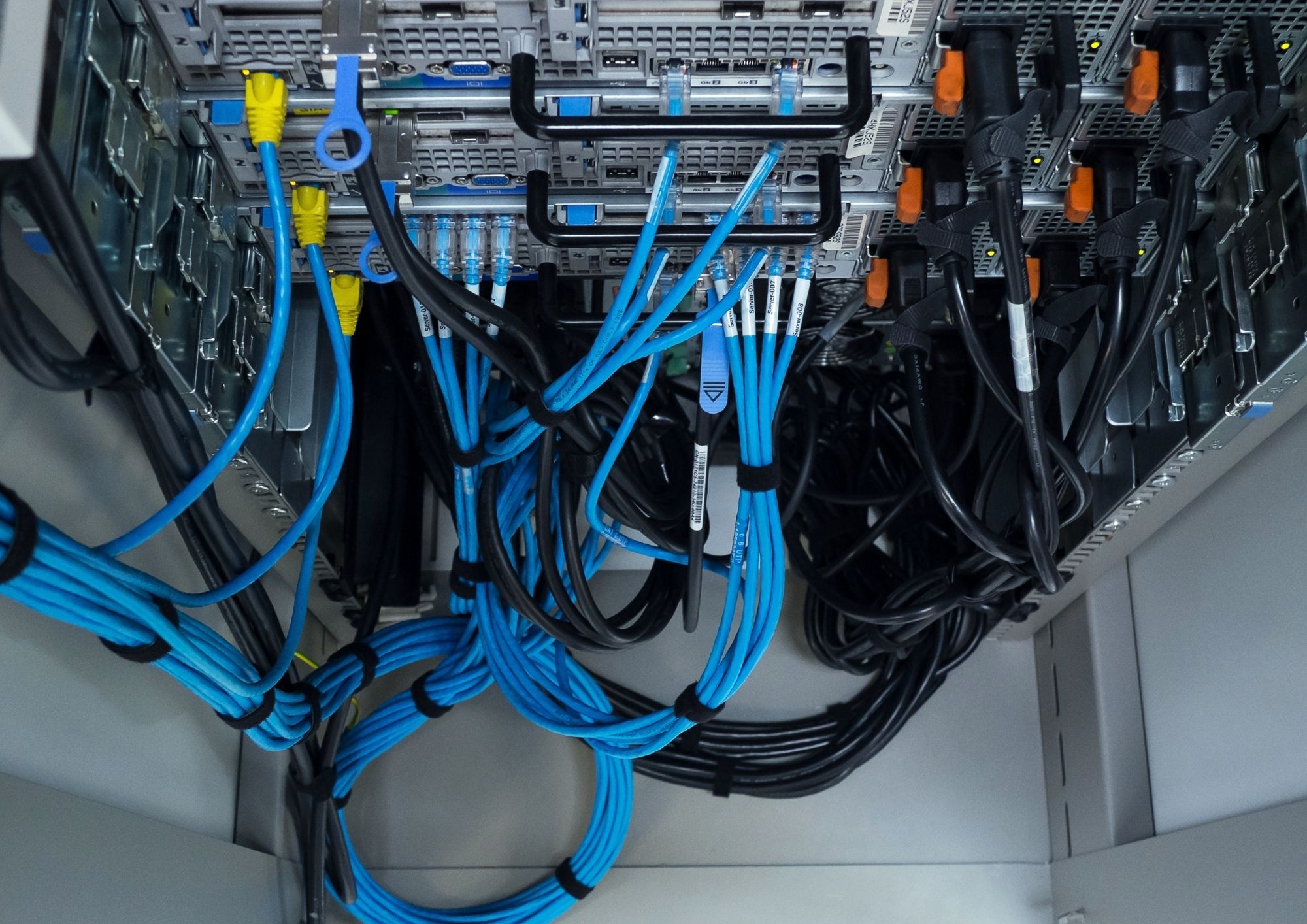
Every link tested and certified, results delivered as a report, ports labelled to TIA-606 and a documented as-built you can hand to the next contractor.
CAT6 or CAT6A — which do you actually need?
CAT6 carries 10 Gigabit Ethernet to 55 metres; CAT6A carries it to the full 100-metre channel. If the cabling has to outlive the equipment plugged into it, CAT6A is the one worth paying for.
Most NYC offices we cable land on CAT6A for new installations and CAT6 for smaller additions to an existing CAT6 plant, because mixing categories on one link drops the whole run to the lower spec.
Jacket rating matters as much as category. Anything run through a plenum air-handling space must be CMP plenum-rated; riser pathways between floors require CMR. Buildings fail inspection on this more often than on anything else.
| CAT6 | CAT6A | |
|---|---|---|
| 10 Gigabit range | 55 m | 100 m |
| Bandwidth | 250 MHz | 500 MHz |
| Alien crosstalk | Not specified | Tested and specified |
| Cable diameter | ~5.5 mm | ~7.5 mm |
| Pathway impact | Standard fill | Larger tray / conduit fill |
| Best for | Adds to existing CAT6 | New installs, PoE++ , Wi-Fi 6E/7 APs |
Design, install, test, support
Four stages, and you get documentation at the end of each one. No cabling job should finish with a rack nobody can read.
Site walk & drop schedule
We walk the space, count drops, check pathways and ceiling type, confirm IDF locations against the 90-metre limit, and issue a written scope you can bid against.
Pull, terminate, dress
Cable pulled through tray, conduit or J-hooks to code, terminated at both ends, dressed into the rack and labelled to a documented scheme.
Certify every link
Each run is certified with a Fluke-class analyser — wiremap, length, insertion loss, NEXT and return loss — and you receive the results as a report.
As-builts & call-backs
Labelling schedule, port map and as-built documentation handed over. We stay reachable for moves, adds and changes afterwards.
Every link is certified, not just "it works"
Certification testing measures a run against the TIA performance standard and produces a pass/fail report per port. A continuity test only proves the wires are connected — it says nothing about whether the link will carry 10 Gigabit.
We certify with a Fluke-class analyser and hand over the full result set: wiremap, length, insertion loss, near-end crosstalk, return loss and delay skew for every port on the panel.
Ports are labelled to the ANSI/TIA-606 administration standard, so the number on the faceplate matches the number on the patch panel and the number on the as-built. Your IT team should never have to tone a cable to find out where it goes.
- Certified test report for every link, delivered as a file
- TIA-606 labelling on faceplates, panels and closets
- As-built port map and closet documentation
- Warranty backed by documented test results

How much does structured cabling cost in NYC?
Commercial cabling in New York is priced per drop, and the number moves with drop count, cable category, how hard the pathway is to reach, and whether the space is occupied. Labour — not cable — is the largest line item on almost every job.
We don't publish a per-drop figure, because a number quoted without seeing the ceiling is a number that changes on day one. What follows is what actually moves the price, so you can budget before we walk the space.
What pushes the price up
- Occupied space. Working around desks, after hours or in phases costs more than an empty floor.
- Hard ceilings and prewar construction. Plaster, masonry and no accessible plenum mean fishing walls rather than dropping from tray.
- Low drop counts. Ten drops carry the same mobilisation, lift and COI overhead as a hundred — the per-drop cost is far higher.
- CAT6A over CAT6. More expensive cable, larger pathway fill, more careful termination.
- Plenum-rated cable where air-handling spaces require CMP.
- Building requirements. Freight elevator windows, COIs, union buildings, after-hours access and patch-and-paint coordination.
What brings it down
- Pre-wire before walls close. Cabling an open build is materially cheaper than retrofitting the same space later.
- Grouped drops. Concentrating work into a single mobilisation instead of repeat visits.
- Higher volume. Per-drop cost falls as the count rises.
- Clean existing pathways with tray, conduit or accessible ceiling already in place.
- Realistic scheduling. Normal hours beat nights and weekends where the space allows.
Built for the people who have to sign off on it
IT managers & directors
Certified test results, TIA-606 labelling and a real as-built — so the next person to open the closet can read it.
Office & facilities managers
Work scheduled around your staff, after hours where needed, and a written scope before anyone touches a ceiling tile.
General & construction managers
Division 27 scope, submittals, COIs on request and a sub that shows up on the day it said it would.
Property & building managers
$2M general liability with blanket additional insured, so a COI for your building is a phone call rather than a two-week endorsement.
Commercial cabling FAQ
How much does structured cabling cost in NYC?
Commercial cabling is priced per drop, and the figure depends on drop count, cable category, pathway difficulty and whether the space is occupied. Labour is the largest cost on almost every job — not the cable. Low drop counts carry the highest per-drop price because mobilisation, lift access and insurance overhead are the same whether you run ten drops or a hundred. We provide a written scope and a fixed number after a site walk-through.
What is a data drop?
A data drop is one complete cable run — pulled from the network rack to a wall or ceiling outlet, terminated at both ends, labelled and tested. One drop equals one working port. A desk with a computer and a phone on separate ports is two drops, not one.
What is the difference between CAT6 and CAT6A?
CAT6 supports 10 Gigabit Ethernet up to 55 metres and 250 MHz of bandwidth. CAT6A supports 10 Gigabit across the full 100-metre channel at 500 MHz and is tested for alien crosstalk. CAT6A cable is thicker, so it takes up more pathway space and needs more careful termination. For new installations that have to outlive the switches plugged into them — and for Wi-Fi 6E and Wi-Fi 7 access points — CAT6A is normally the right specification.
How long does an office cabling installation take?
A small office of 10 to 20 drops is usually one to two days. A 50-drop floor typically runs three to five days. Large multi-floor fit-outs are scheduled in phases alongside the general contractor. Occupied spaces, hard ceilings and after-hours-only access extend the schedule, which is why we confirm all three at the site walk rather than after starting.
Do you work after hours and in occupied offices?
Yes. A large share of Manhattan cabling work has to happen at night, at weekends or in phases around staff, and most buildings restrict freight elevator access to specific windows. We schedule around your building's rules and your team's working hours.
Can you provide a certificate of insurance for our building?
Yes. We carry $2,000,000 general liability with blanket additional insured, and our agent is on call — COIs are typically issued within 24 hours, for unlimited concurrent projects. Blanket additional insured means your building can be added without waiting on a separate endorsement for each site.
Do you test and certify the cabling you install?
Every link is certified with a Fluke-class analyser and you receive the results as a report — wiremap, length, insertion loss, near-end crosstalk, return loss and delay skew per port. Ports are labelled to the ANSI/TIA-606 administration standard and handed over with an as-built port map.
Do you terminate fiber in-house or subcontract it?
In-house. We terminate, splice and certify single-mode and multimode fiber ourselves, including backbone, riser and building-to-building runs. Fiber is not subcontracted out to another crew.
What areas do you serve?
All five boroughs of New York City — Manhattan, Brooklyn, Queens, the Bronx and Staten Island — plus Long Island and northern New Jersey. Our office is at 51 E 2nd St Unit B, New York, NY 10003, and crews work on site Monday to Saturday, 7:00am to 7:00pm.